Featured
Table of Contents
- – The Shift from Strings to Things in 2026
- – Predictive Analytics and Intent Mapping in San...
- – The Convergence of SEO and AEO
- – Semantic Clusters and Content Intelligence Str...
- – Technical Requirements for Browse Visibility ...
- – The Impact of Generative Engine Optimization (...
- – Human Competence in an Automated Age
The Shift from Strings to Things in 2026
Browse technology in 2026 has moved far beyond the basic matching of text strings. For years, digital marketing counted on determining high-volume expressions and inserting them into specific zones of a webpage. Today, the focus has actually shifted toward entity-based intelligence and semantic importance. AI models now translate the hidden intent of a user inquiry, considering context, place, and previous habits to deliver responses rather than just links. This change indicates that keyword intelligence is no longer about finding words people type, however about mapping the ideas they look for.
In 2026, search engines work as enormous knowledge charts. They don't simply see a word like "vehicle" as a series of letters; they see it as an entity linked to "transportation," "insurance coverage," "upkeep," and "electric cars." This interconnectedness requires a technique that treats material as a node within a bigger network of info. Organizations that still focus on density and positioning discover themselves invisible in an era where AI-driven summaries control the top of the results page.
Information from the early months of 2026 programs that over 70% of search journeys now include some kind of generative response. These responses aggregate information from throughout the web, mentioning sources that show the greatest degree of topical authority. To appear in these citations, brands should prove they comprehend the entire topic, not just a couple of lucrative expressions. This is where AI search exposure platforms, such as RankOS, offer an unique advantage by recognizing the semantic gaps that standard tools miss out on.
Predictive Analytics and Intent Mapping in San Antonio
Regional search has undergone a substantial overhaul. In 2026, a user in San Antonio does not receive the very same results as someone a few miles away, even for similar queries. AI now weighs hyper-local data points-- such as real-time stock, regional occasions, and neighborhood-specific patterns-- to focus on results. Keyword intelligence now consists of a temporal and spatial measurement that was technically difficult just a couple of years earlier.
Strategy for the local region concentrates on "intent vectors." Rather of targeting "best pizza," AI tools evaluate whether the user desires a sit-down experience, a quick piece, or a shipment choice based upon their current motion and time of day. This level of granularity needs companies to keep highly structured information. By utilizing innovative material intelligence, business can anticipate these shifts in intent and change their digital existence before the demand peaks.
Steve Morris, CEO of NEWMEDIA.COM, has actually frequently talked about how AI removes the guesswork in these regional methods. His observations in significant service journals recommend that the winners in 2026 are those who utilize AI to translate the "why" behind the search. Numerous organizations now invest heavily in Audio Marketing Metrics to guarantee their data stays available to the big language models that now function as the gatekeepers of the internet.
The Convergence of SEO and AEO
The distinction in between Seo (SEO) and Answer Engine Optimization (AEO) has actually largely disappeared by mid-2026. If a website is not enhanced for an answer engine, it successfully does not exist for a large portion of the mobile and voice-search audience. AEO needs a various kind of keyword intelligence-- one that concentrates on question-and-answer pairs, structured data, and conversational language.
Standard metrics like "keyword problem" have been replaced by "mention likelihood." This metric calculates the probability of an AI design including a particular brand name or piece of content in its created action. Achieving a high mention probability involves more than simply great writing; it requires technical accuracy in how data exists to spiders. Comprehensive Marketing Stats Report offers the essential information to bridge this gap, enabling brand names to see precisely how AI agents perceive their authority on an offered topic.
Semantic Clusters and Content Intelligence Strategies
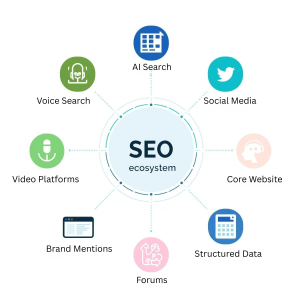
Keyword research study in 2026 focuses on "clusters." A cluster is a group of related subjects that jointly signal knowledge. An organization offering specialized consulting wouldn't just target that single term. Rather, they would build a details architecture covering the history, technical requirements, expense structures, and future patterns of that service. AI utilizes these clusters to identify if a site is a generalist or a true expert.
This approach has altered how material is produced. Instead of 500-word article focused on a single keyword, 2026 methods favor deep-dive resources that answer every possible question a user might have. This "total protection" model ensures that no matter how a user phrases their inquiry, the AI design discovers an appropriate section of the website to referral. This is not about word count, however about the density of facts and the clarity of the relationships in between those truths.
In the domestic market, business are moving away from siloed marketing departments. Keyword intelligence is now a cross-functional discipline that notifies item development, customer care, and sales. If search data shows an increasing interest in a particular feature within a specific territory, that info is instantly used to upgrade web material and sales scripts. The loop between user query and business reaction has actually tightened considerably.
Technical Requirements for Browse Visibility in 2026
The technical side of keyword intelligence has actually ended up being more demanding. Search bots in 2026 are more effective and more discerning. They prioritize sites that utilize Schema.org markup properly to specify entities. Without this structured layer, an AI may have a hard time to understand that a name describes a person and not a product. This technical clearness is the structure upon which all semantic search techniques are developed.
Latency is another factor that AI models consider when picking sources. If two pages supply equally valid information, the engine will cite the one that loads faster and provides a much better user experience. In cities like Denver, Chicago, and Nashville, where digital competitors is fierce, these limited gains in performance can be the difference between a top citation and total exclusion. Businesses increasingly rely on Marketing Stats for SEO Planning to keep their edge in these high-stakes environments.
The Impact of Generative Engine Optimization (GEO)
GEO is the current evolution in search method. It specifically targets the way generative AI synthesizes information. Unlike standard SEO, which takes a look at ranking positions, GEO takes a look at "share of voice" within a produced response. If an AI summarizes the "top service providers" of a service, GEO is the procedure of making sure a brand name is among those names which the description is accurate.
Keyword intelligence for GEO includes evaluating the training information patterns of significant AI designs. While companies can not know precisely what remains in a closed-source model, they can use platforms like RankOS to reverse-engineer which types of material are being favored. In 2026, it is clear that AI chooses material that is objective, data-rich, and cited by other reliable sources. The "echo chamber" effect of 2026 search suggests that being pointed out by one AI often causes being pointed out by others, creating a virtuous cycle of visibility.
Method for professional solutions should account for this multi-model environment. A brand may rank well on one AI assistant however be entirely missing from another. Keyword intelligence tools now track these discrepancies, permitting online marketers to customize their material to the particular choices of different search representatives. This level of subtlety was inconceivable when SEO was almost Google and Bing.
Human Competence in an Automated Age
In spite of the dominance of AI, human technique remains the most essential component of keyword intelligence in 2026. AI can process data and identify patterns, however it can not understand the long-lasting vision of a brand or the emotional nuances of a local market. Steve Morris has actually often explained that while the tools have actually changed, the objective remains the exact same: linking individuals with the solutions they require. AI merely makes that connection quicker and more precise.
The function of a digital firm in 2026 is to act as a translator in between a service's objectives and the AI's algorithms. This includes a mix of innovative storytelling and technical information science. For a firm in Dallas, Atlanta, or LA, this might indicate taking complex industry jargon and structuring it so that an AI can easily digest it, while still guaranteeing it resonates with human readers. The balance between "writing for bots" and "writing for humans" has actually reached a point where the two are practically identical-- due to the fact that the bots have actually become so excellent at mimicking human understanding.
Looking towards the end of 2026, the focus will likely move even further toward tailored search. As AI representatives end up being more incorporated into life, they will anticipate requirements before a search is even carried out. Keyword intelligence will then progress into "context intelligence," where the goal is to be the most relevant response for a specific person at a particular minute. Those who have actually constructed a structure of semantic authority and technical excellence will be the only ones who remain visible in this predictive future.

Table of Contents
- – The Shift from Strings to Things in 2026
- – Predictive Analytics and Intent Mapping in San...
- – The Convergence of SEO and AEO
- – Semantic Clusters and Content Intelligence Str...
- – Technical Requirements for Browse Visibility ...
- – The Impact of Generative Engine Optimization (...
- – Human Competence in an Automated Age
Latest Posts
How Semantic Search Redefines San Antonio
The Role of SEO in Securing Authority
Using AI to Enhance Digital Performance
More
Latest Posts
How Semantic Search Redefines San Antonio
The Role of SEO in Securing Authority
Using AI to Enhance Digital Performance